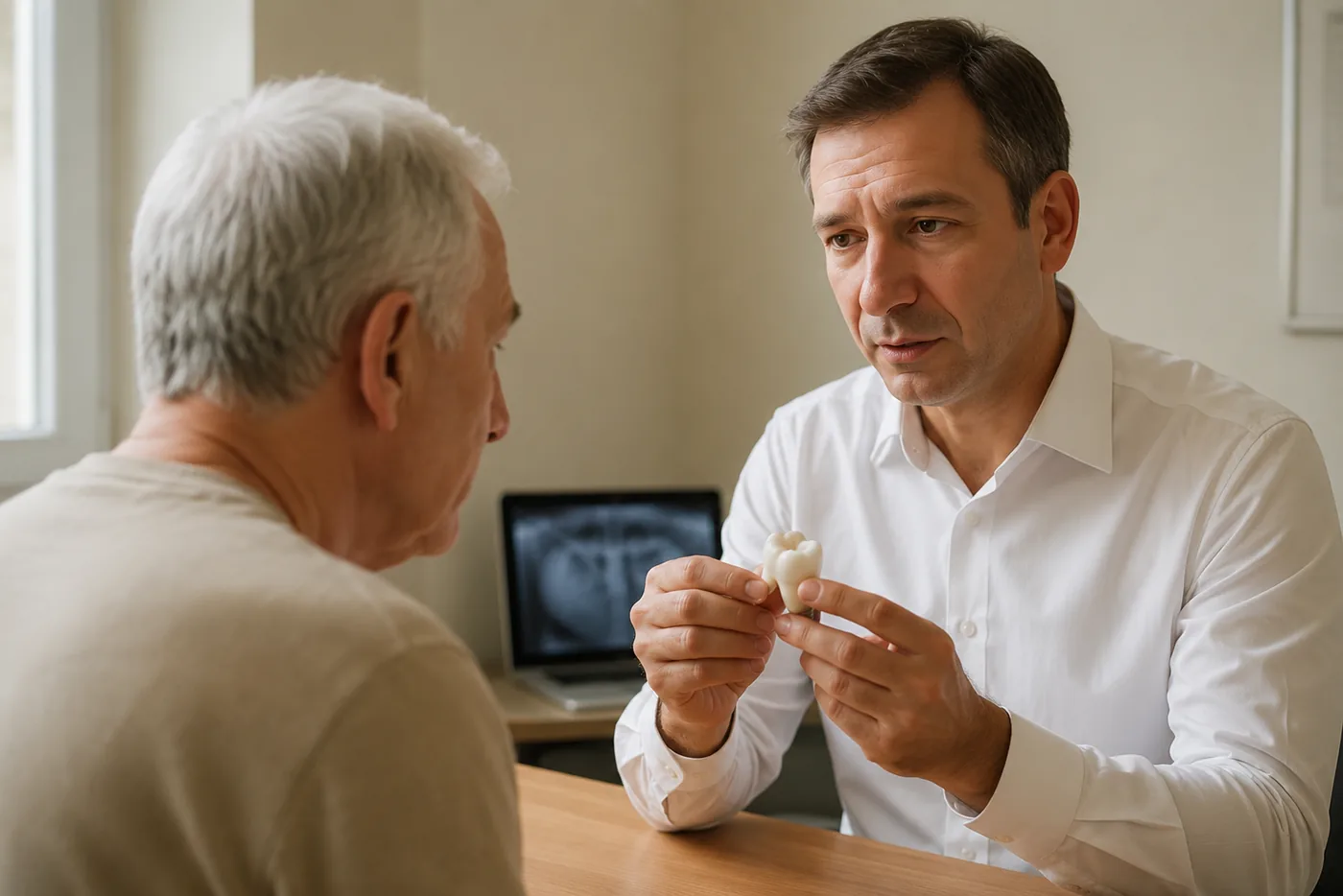
Yes, a same-day milled ceramic crown can be just as strong and just as natural-looking as a traditional lab-made crown, for many cases. The material does more work than the timeline. Modern milled ceramics are dense and well-tested, and they hold up fine to normal chewing on most back and front teeth. The qualification is that same-day isn't automatically the right call for every tooth. I still have to weigh where the tooth sits, how much bite force it absorbs, and how closely the color needs to blend with the teeth next to it. A few situations still favor a lab crown, and that usually only becomes clear once I've actually looked in your mouth.
Why "same-day" sounds like a shortcut
A lot of general dental content treats this as a simple trade: fast but flimsy versus slow but reliable. That framing skips the part that actually matters, which is what the crown is made of and how well it's fitted, not how many appointments it took.
Same-day systems use a digital scan of your prepared tooth instead of a putty impression, then mill a solid block of ceramic while you wait. Lab crowns use the same digital or physical impression, then a technician builds and fires the crown over several days. Both processes can produce an excellent result. Both can also produce a mediocre one if the fit isn't checked carefully. The honest comparison isn't same-day versus lab. It's whether the material and the fit are right for your specific tooth.
The assumption many patients bring into the chair
Patients often assume same-day must mean a lower-quality shortcut, the dental equivalent of fast food instead of a home-cooked meal. That assumption made more sense years ago, when early milled ceramics were noticeably weaker and harder to shade-match. It doesn't hold up as well today.
Current milled ceramic blocks used in most same-day systems are lab-grade material, manufactured under the same quality standards as the blocks used to build lab crowns. The speed comes from skipping the shipping and waiting time between your appointment and a lab, not from using a cheaper substance. For a large share of back-tooth and front-tooth cases, a same-day crown and a lab crown start from comparable raw material.
What actually decides which crown is right for your tooth
When I'm deciding between a milled same-day crown and a lab-fabricated one, three things carry the most weight. The first is location. A molar that absorbs heavy chewing force needs a material proven to resist chipping and cracking under repeated pressure. The second is the bite itself. Someone who clenches or grinds puts different demands on a crown than someone with a light, even bite.
The third is the esthetic target. A back molar rarely needs to match a neighboring tooth's exact translucency. A front tooth, especially one next to a natural tooth that's still visible when you smile, often does. Milled ceramics have improved a great deal on shading and layered translucency, but a lab technician hand-layering porcelain still has an edge for the most demanding esthetic cases, particularly where several front teeth need to match each other precisely.
How the two methods compare in practice
Same-day milled crown
Digital scan and milling, done in a single visit. Strong, well-tested ceramic. Excellent fit for most molars and premolars. No second appointment or temporary crown to manage.
Lab-fabricated crown
Impression sent to a technician, built over several days, seated at a second visit. A temporary crown covers the tooth in the meantime. Often the better choice for complex shade-matching or multi-tooth esthetic work.
Cost tends to be similar between the two once you factor in a second appointment for the lab option. The real differences show up in convenience and in the narrower set of cases where hand layering still outperforms milling.
Getting ready for either option
- Ask whether your tooth is a good candidate for milling based on its location and your bite pattern
- Bring up teeth grinding or clenching if you have it, since that changes the material recommendation
- Ask to see the shade being matched against your natural teeth before the crown is finalized
- If a front tooth is involved, ask whether a lab crown would give a more precise color match
Confirm how the crown will be adjusted if your bite feels off once the numbness wears off
When a lab-made crown may still be the smarter call
A few situations still tilt toward a traditional lab crown. Front teeth that need to match several neighboring teeth in color and translucency at once are the most common one. Cases with very limited space between the upper and lower teeth sometimes need the extra layering control a lab technician can provide. A tooth with an unusual root shape or a margin that sits deep below the gumline can also be easier to manage with a lab workflow that allows more time for adjustments before the final crown is fabricated.
None of these situations mean a same-day crown is inferior in general. They mean that particular tooth has demands that favor one process over the other, which is exactly the kind of judgment call that needs an in-person look rather than a general rule.
Straight answers to what patients ask most
Does a same-day crown last as long as a lab crown? For most back and front teeth, yes. Long-term studies on milled ceramic crowns show survival rates comparable to lab-made crowns over many years, when the material and fit are appropriate for the tooth.
Will a same-day crown look obviously different from my other teeth? Not usually. Milling systems now offer a range of shades and translucencies, and most patients can't tell the difference by looking. Front-tooth cases needing very precise matching are the exception.
Is a same-day crown ever the wrong choice for cost reasons? Cost is rarely the deciding factor between the two. The decision should come down to the tooth's location, bite forces, and esthetic needs, not price alone.
Can I ask for a same-day crown even if my dentist suggests a lab crown? You can ask, and it's worth understanding why they made that recommendation. If the concern is shade-matching on a visible front tooth, that's worth taking seriously rather than overriding.
Does a same-day crown require a follow-up visit? Usually just a routine check at your next cleaning. It doesn't need a second seating appointment the way a lab crown does, since the whole process happens in one visit.
The takeaway for your next crown
The bottom line is that "same-day" isn't a quality shortcut. It's a different production method using comparable materials, and for most teeth it produces a crown that's just as strong and just as natural-looking as a lab-made one. The exceptions are real but narrow: complex front-tooth shade-matching, unusual root anatomy, or very tight bite clearance. Those are worth discussing openly at your appointment rather than assuming either option is automatically better.
Related reading
Two related topics worth a look: gums that bleed despite daily brushing and when bleeding gums are a warning sign. A couple more related reads: ongoing swelling around a dental implant and whitening trays and existing crowns or veneers. For the broader topic list, see the full dental topics index.
Same-day and lab-made crowns aren't a hierarchy. They're two well-tested tools, each better suited to certain teeth than others.