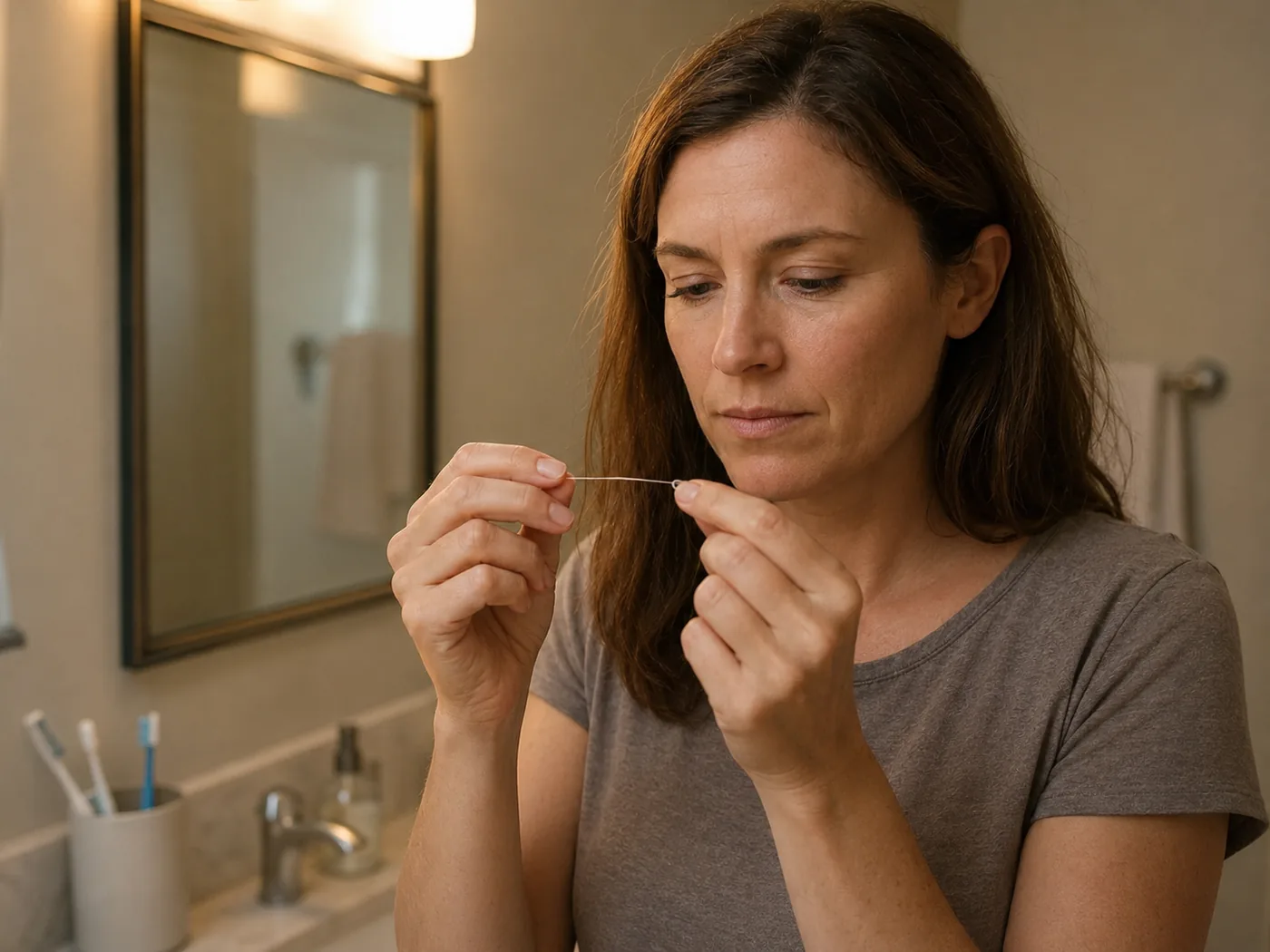
If your gums bleed when you brush or floss even though you do it every day, the most common reason is inflammation from plaque that's still sitting along the gumline or between your teeth, not a lack of effort on your part. Brushing removes plaque from the flat surfaces of your teeth fairly well, but it often leaves the tight space where the gum meets the tooth, and the contact points between teeth, mostly untouched. That inflamed tissue bleeds easily, sometimes even from a soft touch. The main thing that changes how worried to be is how long it's been going on: a few days of bleeding after starting a new routine is different from bleeding that's persisted for weeks. Bleeding that continues, spreads, or comes with swelling, loose teeth, or a bad taste is worth an in-person exam to see exactly what's happening below the gumline.
The gap between brushing and actually cleaning
Plaque is a soft, sticky film of bacteria that rebuilds itself within hours of a cleaning. When it's left undisturbed along the gumline for more than a day or two, it triggers an inflammatory response called gingivitis. The gum tissue becomes swollen and full of small, fragile blood vessels close to the surface, which is exactly why a normal amount of brushing pressure or the light drag of floss is enough to make it bleed. This is a local reaction to the plaque sitting right there, not a sign that something is broken elsewhere in the body.
There are also factors that make gums more reactive even when plaque control is reasonably good. Certain blood pressure medications, blood thinners, and some seizure medications can change how gum tissue responds or how easily it bleeds. Hormonal shifts, including puberty, pregnancy, and the menstrual cycle, can make gums more sensitive to the same amount of plaque. Dry mouth, whether from medication side effects, mouth breathing, or reduced saliva flow, removes one of the body's own natural defenses against plaque buildup, since saliva helps rinse and buffer bacteria throughout the day.
What patients often misunderstand
Many people assume that since they brush every day, and sometimes even brush twice or brush longer to compensate for bleeding, that should be enough to prevent it. In practice, frequency matters less than technique and thoroughness. A toothbrush bristle simply cannot reach into the tight contact point between two teeth the way floss or an interdental brush can. Someone can brush conscientiously twice a day and still have plaque quietly accumulating between the teeth and just under the gum edge, which is precisely where bleeding tends to start. Brushing harder in response to bleeding often makes it worse, since it can further irritate already-inflamed tissue without actually reaching the plaque causing the problem.
What a dentist may look for during an exam
When a patient describes bleeding despite regular brushing, I start by watching how they actually brush, since technique varies a lot more than people expect, and small adjustments to angle and coverage can matter more than switching toothpaste. I also gently probe between the teeth and along the gumline with a periodontal probe, which shows whether plaque or early tartar has built up in spots a toothbrush doesn't reach, and gives a reading on how deep the gum pockets are and whether there's active inflammation. Because brushing frequency alone doesn't guarantee effective plaque removal, I also ask about current medications, recent hormonal changes, and symptoms of dry mouth, since any of those can explain bleeding that persists even in someone with a genuinely consistent routine. Putting those pieces together, rather than assuming the patient simply isn't brushing enough, is usually what identifies the real cause.
What you can do now
- Add daily floss or an interdental brush, using a gentle sawing motion that hugs the side of each tooth rather than snapping straight down onto the gum
- Switch to a soft-bristle brush and use light pressure, angling the bristles slightly toward the gumline instead of scrubbing straight across
- Rinse with plain water or an alcohol-free mouth rinse if dry mouth is a factor, and sip water through the day
- Give it one to two weeks of consistent interdental cleaning before judging whether the bleeding is improving
Note any medications you take regularly so a dentist can factor them into the picture if bleeding continues
When it becomes urgent
Occasional light bleeding that responds to improved cleaning at home is common and not an emergency. It's time to schedule an exam, rather than wait it out, if bleeding continues past two to three weeks of consistent brushing and flossing, if it happens with little to no provocation, or if you notice gum swelling, gums that look like they're pulling away from the teeth, persistent bad breath or taste, or any looseness in a tooth. Bleeding along with fever, facial swelling, or difficulty swallowing warrants prompt attention rather than a routine appointment.
Treatment possibilities
For straightforward gingivitis, a professional cleaning to remove hardened tartar that a toothbrush can't touch, combined with a corrected at-home routine, often resolves bleeding within a couple of weeks. If probing shows deeper pockets or bone changes suggesting the inflammation has progressed further, a deeper cleaning below the gumline, sometimes called scaling and root planing, may be recommended. When a medication or dry mouth appears to be a meaningful contributor, that gets addressed alongside the cleaning, sometimes in coordination with your physician, rather than treated as a separate issue.
Frequently asked questions
Does bleeding mean I have gum disease? Bleeding is the earliest sign of gum inflammation, which is often reversible gingivitis rather than the more advanced periodontitis. An exam is what distinguishes the two.
Should I stop flossing if it makes my gums bleed? No. Bleeding when you first start flossing regularly is common and typically settles within a week or two as the gums heal and become less inflamed.
Can stress cause bleeding gums? Stress itself doesn't directly cause bleeding, but it can affect habits like clenching, mouth breathing, or skipping oral care, which indirectly allow plaque to build up.
Is an electric toothbrush enough on its own? An electric toothbrush can clean tooth surfaces very effectively, but it still doesn't reliably clean between teeth, so interdental cleaning remains necessary alongside it.
Can bleeding gums affect the rest of my body? Ongoing gum inflammation is worth taking seriously and addressing, which is one more reason persistent bleeding deserves an in-person evaluation rather than being brushed off.
Bottom line
The bottom line is that daily brushing is necessary but often not sufficient on its own, since bleeding gums usually trace back to plaque between the teeth and along the gumline that a toothbrush alone doesn't fully clear. Adding real interdental cleaning and a gentler technique resolves most cases within a couple of weeks. Bleeding that persists, worsens, or comes with swelling or looseness is a reason to have it examined rather than continuing to brush harder.
Related reading
This overlaps with a few other common questions, including when bleeding gums are a warning sign and painless gum recession. See also: gums looking darker or bruised after a deep cleaning and ongoing swelling around a dental implant. For the broader topic list, see the full dental topics index.
Cleans the flat tooth surfaces well but skips the contact points between teeth and can abrade an already-inflamed gumline.
Reaches the plaque between teeth that a brush cannot access, which is usually the actual source of the bleeding.
Bleeding that improves within a week or two of adding real interdental cleaning is usually gingivitis responding to better plaque removal, exactly as expected.