Will whitening trays hurt a crown or veneer
Whitening trays are very unlikely to physically damage a crown or veneer. The problem almost never shows up until after treatment is finished. The gel lightens your natural enamel, but it does nothing to porcelain or composite restorations, so a crown or veneer that matched your teeth perfectly before whitening can suddenly look noticeably darker once the teeth around it lighten. Whether this turns into a real problem depends on where the restoration sits, how visible it is when you smile, and how many shades your enamel actually lifts. An in-person shade check is really the only way to know how close the current match already is and how far whitening might push it apart.
Why the gel treats enamel and restorations so differently
Natural enamel is a porous, mineral structure. Whitening gels work by pushing peroxide molecules through that porous layer to break apart the pigmented compounds that build up over years of coffee, tea, wine, and normal aging. That's a real chemical change, and it's why enamel can genuinely lighten several shades with consistent use.
Porcelain and composite resin are engineered materials, fired or cured to a specific shade at the time they were made. They aren't porous the same way, so there's nothing for the whitening gel to penetrate or lift. A crown, veneer, bonding, or filling stays essentially the same color it was on the day it was placed, no matter how long a tray sits on it.
What patients often assume, and why it's wrong
Many patients assume a whitening kit will lighten every visible tooth surface together, restorations included, the same way it lightens the rest of the smile. It feels like a reasonable assumption since the tray covers everything at once. Then, a couple of weeks into treatment, a crown or veneer that used to blend in perfectly starts standing out as the odd one out, sometimes by a surprising amount.
The restoration hasn't changed at all. Everything around it has. That's an important distinction, because it changes what the fix actually looks like: there's no gel, technique, or longer wear time that will bring an existing crown or veneer down to match a newly whitened smile.
What I actually check before someone whitens
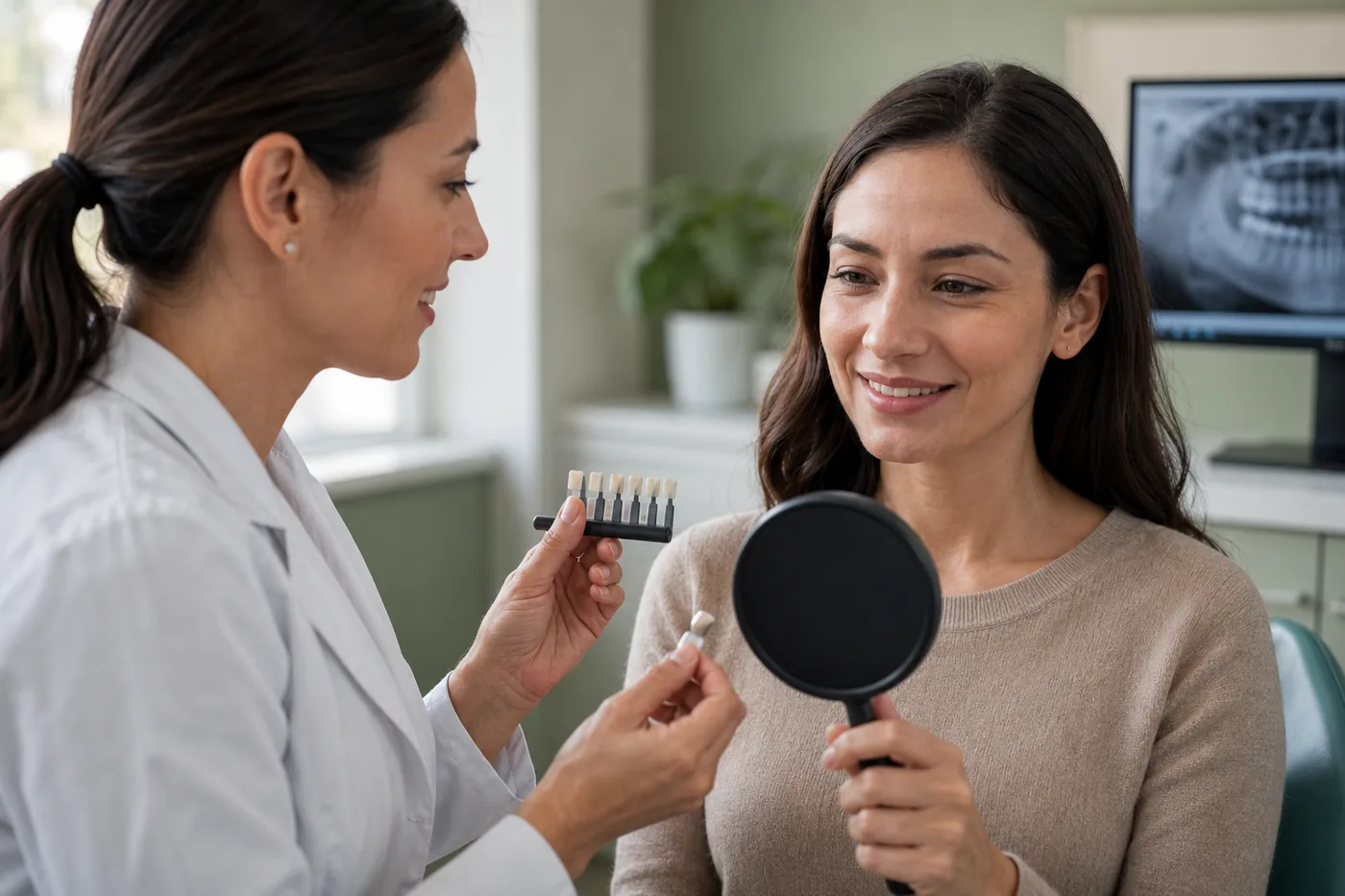
When a patient with an existing crown or veneer asks about whitening, I start by explaining plainly that the gel changes the shade of natural enamel but not porcelain or composite. Then I look at the current shade match itself: how closely the restoration currently blends with the surrounding teeth, and how visible that tooth is in a normal smile versus a wide laugh.
From there, the real planning question is whether the restoration will likely need to be replaced after whitening to match the new, lighter shade, or whether the difference will be subtle enough that it isn't worth touching. A front tooth veneer that everyone sees when you talk is treated very differently than a back molar crown nobody but your dentist ever looks at closely.
Practical steps before you start a whitening kit
- Have a dentist check the current shade match of any crowns, veneers, or visible fillings before you begin
- Tell your dentist exactly which teeth have restorations, since this changes how the whitening plan is designed
- Ask whether a custom, professionally fitted tray makes more sense than a generic drugstore kit for your situation
- Photograph your smile before starting so any shade difference afterward is easy to compare
Whiten first if you know a new crown or veneer is coming, then have the restoration matched to your final, settled shade
When this needs a call, not just patience
A visible shade mismatch after whitening is a cosmetic issue, not a dental emergency, and it can generally wait for a routine appointment to discuss. What isn't routine is gum irritation, tenderness, or a tray that doesn't fit the way it used to. If a tray feels loose, pinches, or you notice ongoing gum soreness beyond the first day or two of use, stop wearing it and call your dentist rather than pushing through.
Options once a mismatch shows up
If a restoration ends up visibly darker after whitening and it bothers you, replacing it to match the new shade is the main option. Porcelain crowns and veneers can't be re-whitened or polished lighter once fired, so a color change means a new restoration rather than an adjustment to the existing one. Composite fillings or bonding have a little more flexibility, since a dentist can sometimes add a thin layer of lighter composite to bring the color closer, though this depends on how the material has aged.
The cleanest approach, when the timing allows it, is sequencing: finish whitening first, let the shade stabilize for a couple of weeks, then have any new crown, veneer, or bonding matched to that final color. This avoids the mismatch problem altogether for anyone who knows restorative work is coming up.
Common questions about whitening with existing restorations
Can I whiten my teeth if I only have one crown? Yes. One crown rarely changes the plan, especially if it's on a back tooth. It's worth a quick shade check first if the crown is visible when you smile.
Will whitening toothpaste do the same thing to a veneer? Whitening toothpaste works through mild abrasion and generally has much less effect on natural enamel too, but it won't lighten a veneer's underlying shade any more than a tray-based gel would.
How long should I wait after whitening before getting a new crown or veneer? Many dentists suggest waiting one to two weeks after finishing a whitening course, since the shade can continue to settle slightly before it's stable enough to match against.
Does an existing mismatch fade or blend in over time? No. The restoration's color is fixed at manufacture. Any color difference you see right after whitening will still be there months later unless the restoration is replaced.
Can a veneer be whitened again later to catch up? No, but a new veneer can be fabricated in a lighter shade to match your current teeth whenever you're ready to replace it.
The bottom line
Whitening trays are unlikely to physically damage a crown or veneer. The bottom line is that the actual risk is cosmetic: your natural teeth can lighten while an existing restoration stays exactly the same shade, and that gap becomes visible only after the fact. A shade check before you start, and honest planning about which teeth have restorations, is what actually prevents the surprise.
A crown doesn't resist whitening. It simply isn't part of the chemistry at all.
Related reading
This connects to a couple of other things patients often ask about: whether Invisalign can correct bite alignment and bonding versus a filling for a chipped front tooth. For more, see the pieces on teeth staying yellow after a whitening treatment and same-day crowns versus traditional lab crowns. For the broader topic list, see the full dental topics index.
A shade shift is rarely visible in daily conversation. Whitening is usually safe to proceed with as planned.
Even a small shade gap becomes obvious when smiling. Worth a shade discussion before starting any whitening kit.