A new crown that hurts when you bite is usually about pressure, not disease, so a normal X-ray does not clear it. Two things cause most of these cases: the crown is sitting a fraction of a millimeter too high, or the ligament around the root is still inflamed from the procedure itself. Neither shows up on an X-ray, because an X-ray reads bone density and structure, not how forcefully your teeth strike when you close. The main thing that changes urgency is whether the pain is easing day by day or getting sharper. Mild soreness that fades over a week or two usually settles on its own. Pain that is worsening, or that hits hard on one specific tap, generally needs an in-person bite check to confirm.
What's actually happening under the crown
When a crown goes on, your bite changes by a small amount even in a well-done case. A few tenths of a millimeter of extra height on one cusp can be enough to concentrate all your biting force onto that single tooth instead of spreading it across your whole arch. Every time you close your mouth, that tooth absorbs more than its share.
The ligament that holds your tooth in the bone is also involved. It got stretched and jostled during the prep, the temporary, and the cementation. That tissue can stay tender for one to three weeks the same way a joint feels sore after minor trauma, even though nothing is structurally wrong. Add in nerve irritation from the drilling itself, and mild lingering sensitivity to pressure or temperature is common in the first stretch after a crown is placed.
Less often, the cause is a bonding or cementation issue, a small void under the crown, or a crack in the tooth that predates the crown and simply wasn't causing pain until the tooth started taking on more load.
The x-ray blind spot
It's a reasonable assumption. An X-ray looks thorough, so a clean one feels like it should mean everything is fine. But bite height problems and ligament inflammation are both mechanical issues, not structural ones, and an X-ray was never built to capture either. It shows you bone density, root shape, and whether there is decay or a shadow near the tip of the root. It cannot show how hard your teeth are striking each other, and it cannot show a ligament that is simply irritated rather than infected.
How I track down a high spot
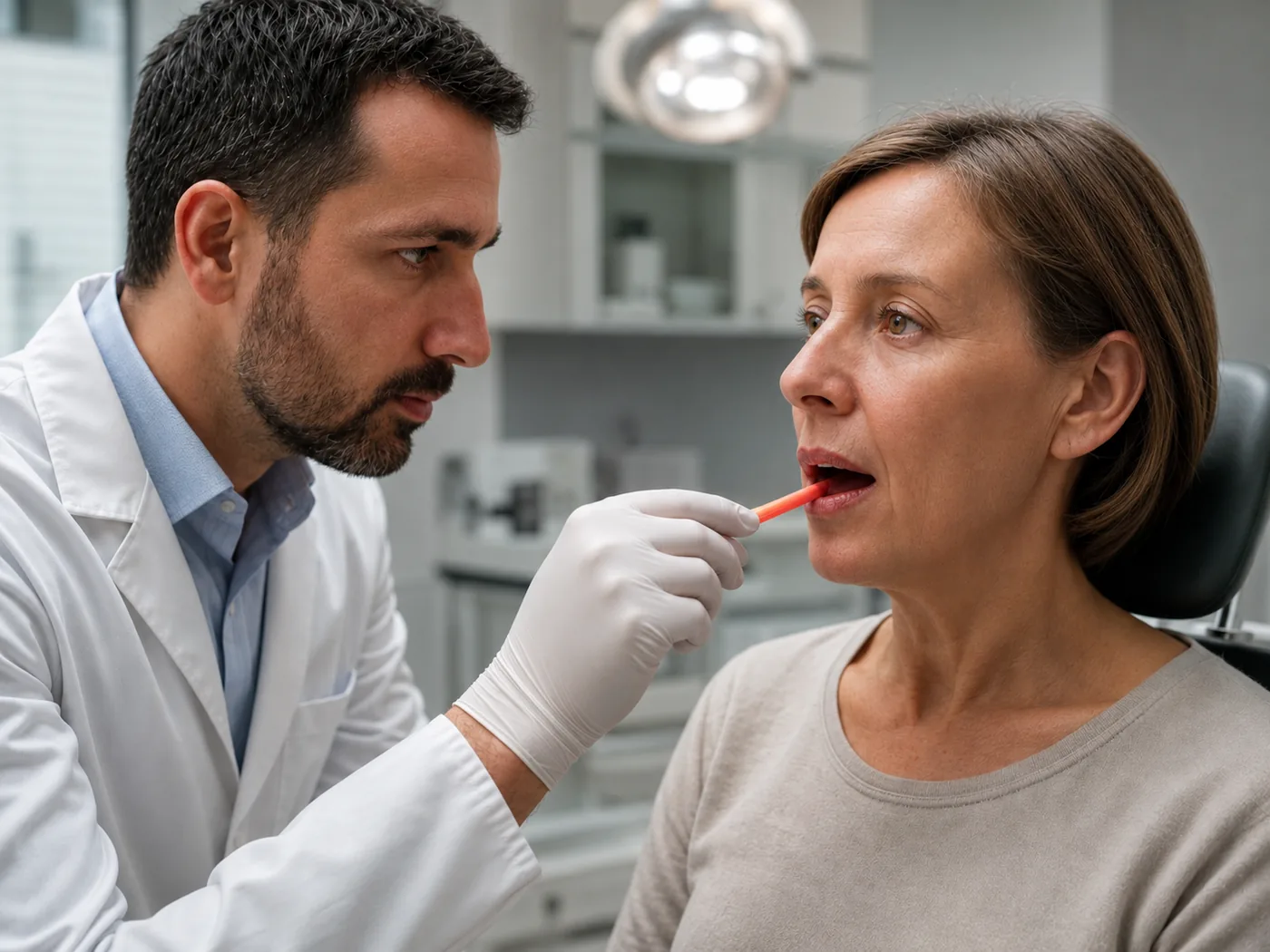
This is a bite exam, not an imaging exam. I have you bite on thin colored articulating paper, which marks exactly where your teeth are making contact and how hard. A high spot on the new crown usually leaves a heavier, darker mark than the surrounding teeth, and that's often visible within seconds.
I also check the tooth for tenderness to gentle tapping, called percussion testing, which points toward ligament inflammation rather than a bite issue. I'll ask you specific questions: does it hurt on every bite or only certain ones, does it linger after the pressure is gone, is it worse with hot or cold. The pattern of your answers, combined with the paper marks and the tap test, usually tells me within one visit whether this is settling inflammation, a high spot that needs shaving down, or something that needs a closer look, like a possible crack.
Settling in or needs an adjustment
Timing is the clue I lean on most. Inflammation from the procedure tends to peak in the first few days and then gradually fade. A true high spot usually doesn't fade at all. It stays exactly as sharp on day ten as it was on day two, because the mechanical cause never went away on its own.
What to do for now
- Chew on the opposite side of your mouth for a few days if the discomfort is manageable
- Take an over-the-counter anti-inflammatory as directed on the label if you have no reason to avoid it
- Avoid very hard, sticky, or crunchy foods on that tooth until the soreness clears
- Keep flossing gently around the crown, since trapped food can add its own irritation
Call the office if the pain is sharp, isolated to one tooth, or not improving after four to five days
A bite adjustment itself is quick and usually painless. It's polishing, not drilling into the crown, and most patients feel the difference the moment they stand up from the chair.
Signs this can't wait
Call sooner rather than later if you notice swelling in the gum or face, pain that wakes you up at night, a throbbing quality rather than a dull ache, or pain that keeps intensifying instead of leveling off. Those point away from simple bite or ligament issues and toward something that needs prompt evaluation, such as an infection or a deeper crack.
A fever, a bad taste that won't go away, or visible swelling near the crowned tooth are reasons to be seen quickly rather than waiting out the usual settling window.
How we fix it
If articulating paper finds a high spot, I adjust the crown's surface in small increments and recheck the bite marks after each pass, so I'm never removing more than necessary. If the issue is ligament inflammation, the treatment is often simply time, sometimes paired with a temporary adjustment to take pressure off the tooth while it heals.
If percussion testing or your description suggests a crack, or if sensitivity to cold lingers well past what a normal crown recovery should feel like, further evaluation may be needed to check whether the nerve has become irritated enough to need root canal treatment. That outcome is uncommon for straightforward bite soreness, but it's part of why persistent or worsening pain deserves an actual exam instead of reassurance from an X-ray alone.
Most of the time, a crown that hurts when you bite is fixed with paper and a polishing bur, not a new procedure.
Questions patients ask me
How long is normal soreness after getting a crown?
Mild sensitivity to pressure or temperature for one to two weeks is common and usually fades gradually rather than staying constant.
Can a crown feel high even if I can't feel it with my tongue?
Yes. A difference of a fraction of a millimeter is often too subtle to detect by feel but still enough to concentrate biting force on that tooth.
Does a bite adjustment weaken the crown?
No. Adjustments remove a tiny amount of surface material and are then polished smooth, which does not affect the crown's strength or seal.
Should I ask for another X-ray if the pain continues?
An X-ray can still be useful to rule out decay or a root issue, but a bite exam with articulating paper is what actually identifies a high spot.
What if the pain is only with cold, not with biting?
That pattern points more toward nerve irritation from the procedure than a bite issue, and it's worth mentioning specifically at your follow-up so the exam can focus there.
The takeaway
A normal X-ray after a new crown rules out certain problems, but bite pressure isn't one of them. If biting pain is mild and improving, give it a week or two. If it's sharp, isolated, or getting worse, a short bite-adjustment visit is usually all it takes, and it's worth having checked rather than assumed away because the imaging looked clean.
Related reading
A few related questions come up alongside this one: a single tooth reacting sharply to cold and tooth pain that suddenly stops on its own. Also worth reading: deciding whether severe tooth pain is a true emergency and pain specifically on releasing a bite. For the broader topic list, see the full dental topics index.
Related reading
A few related questions come up alongside this one: a single tooth reacting sharply to cold and tooth pain that suddenly stops on its own. Also worth reading: deciding whether severe tooth pain is a true emergency and pain specifically on releasing a bite. For the broader topic list, see the full dental topics index.