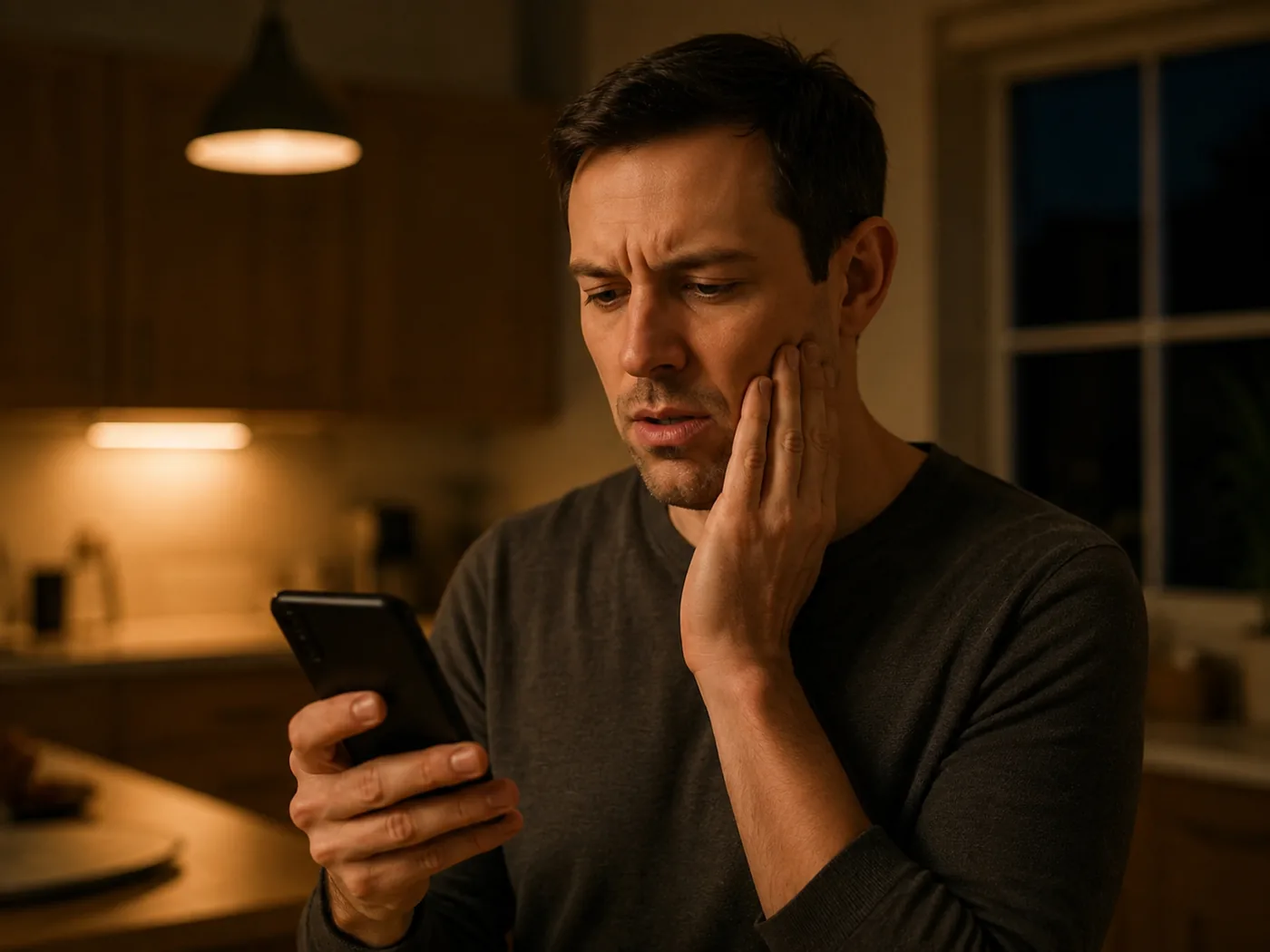
If your permanent crown feels loose but stays on the tooth and doesn't hurt, you can usually get through a weekend. That doesn't mean it's fine to ignore. The real issue isn't whether the crown survives two more days. It's whether the cement seal underneath has already broken down, since that gap lets saliva and bacteria reach the tooth below. A crown that rocks when you bite, tastes faintly metallic, or comes with a new bad odor is telling you the seal is probably gone. Call your dentist Monday morning and ask for an urgent same-day slot. Chew on the other side until then, and treat the crown coming out completely as the one sign that changes everything.
Why crowns loosen at all
Cement is not designed to last forever. Most permanent crowns are held on with a bonding or luting cement that gradually wears at the margin, the thin line where the crown meets your natural tooth. Years of chewing, grinding at night, or biting something unexpectedly hard can micro-fracture that seal long before the crown itself looks damaged.
Decay is another common cause. If bacteria found a way under the edge of the crown at some point, the tooth structure supporting it can soften slightly, leaving less surface for the cement to grip. A crown can feel snug for years and then loosen almost overnight once that erosion reaches a tipping point.
Bite problems play a role too. If your bite shifted after a nearby tooth was treated, or a nightguard stopped fitting the way it used to, uneven pressure on one crown can work it loose faster than ordinary wear alone would.
Why "it's still on" feels safe
Here's where most patients get it wrong. A crown that's still sitting on the tooth, still roughly the right shape, and not causing pain feels like a cosmetic annoyance at worst, something to mention at your next cleaning rather than a reason to call now.
That assumption skips over what's actually happening underneath. Once the cement seal breaks, even partially, there's a gap between the crown and the tooth that wasn't there before. Saliva carries bacteria into that space constantly, and the crown now traps them against the tooth surface instead of keeping them out. The tooth underneath a crown is often already treated, root canaled or built up, which means it has less natural defense against new decay than an untouched tooth would.
A loose crown isn't cosmetic. It's a broken seal on a tooth that may not have much protection left.
What I look for in the chair
When someone comes in with a wiggling crown, I'm not just checking whether it's still attached. I check whether it's fully seated on the tooth or actually rocking when I press on it from different angles, since those are two different problems with different urgency. A crown that rocks even slightly usually means the cement bond has failed enough that it's only a matter of time.
I also ask about taste and smell. A persistent bad taste, or a faint odor when you floss near that tooth, is one of the more reliable signs the cement seal has broken down, sometimes before you can feel any looseness at all. That combination, taste plus mobility, tells me bacteria have likely had access to the space between crown and tooth for a while, not just since this morning.
Finally, I evaluate how exposed the underlying tooth actually is. Some loose crowns still cover the tooth completely. Others have shifted enough that a margin is visibly open, which changes how quickly I want to see you.
Getting through the weekend without making it worse
Until you're actually in the chair, the goal is simple: limit what reaches that gap and don't make the looseness worse.
- Chew on the opposite side of your mouth for every meal
- Skip sticky, hard, or chewy foods that could pull the crown further or pop it off
- Rinse gently with warm salt water after eating to reduce what collects near the margin
- Avoid ice, hard candy, and opening packages or biting your nails with that tooth
If the crown comes off completely, keep it and bring it with you instead of throwing it away
Do not use super glue or household adhesive to reattach it yourself
Signs it can't wait for Monday
A wobbly crown that stays put over a weekend is usually a Monday problem, not a tonight problem. A few specific changes turn it into something you shouldn't wait on.
If the crown comes off entirely, the exposed tooth is now unprotected against temperature, pressure, and bacteria all at once, a different situation than a crown that's merely loose. Sharp or throbbing pain, rather than a dull ache, often points to nerve involvement rather than a loose seal on its own. Swelling in the gum or face, a fever, or a taste that keeps getting worse instead of staying steady are all signs the area may be infected rather than simply irritated.
Likely fine until Monday
- Crown still fully covers the tooth
- No pain, only mild movement when biting
- No swelling, fever, or worsening taste
- Came loose gradually, not from an injury
Needs same-day care
- Crown has partly or fully come off
- Sharp pain, or pain that's getting worse
- Any swelling, fever, or worsening odor
- Loosened suddenly after a blow to the mouth
Any item on the right means calling an emergency dental line the same day, even on a weekend, rather than waiting for Monday's regular schedule.
What treatment usually looks like
What happens next depends on what I find during the exam. If the crown itself is intact and the tooth underneath looks healthy, recementing the same crown is often enough, sometimes finished in a single short visit.
If decay has developed under the margin, the crown usually needs to come off first so I can clean out the affected area before anything goes back on. Depending on how much tooth structure remains, that might mean the same crown returns with a rebuilt foundation, or it might mean a new crown if the old one no longer fits the corrected shape.
Occasionally the real problem isn't the crown or the cement at all, it's a bite putting uneven force on that tooth. In that case, I'll also check your bite and adjust it, since recementing without fixing that tends to repeat the same loosening a few months later.
Quick answers
Can I use denture adhesive or super glue to hold it on myself?
No. Both make it harder for your dentist to clean and properly recement the crown, and neither is safe for use against a live tooth.
Does a loose crown always mean the tooth underneath is decaying?
Not always. Sometimes it's simply worn-out cement on a healthy tooth. You can't tell the difference without an exam, which is exactly why waiting indefinitely isn't a good gamble.
Is it really an emergency if there's no pain at all?
Painless doesn't mean risk-free. Some of the more concerning cases are the ones that never hurt, because the nerve was already treated or the damage is still building quietly.
What if the crown falls out completely over the weekend?
Keep it, avoid chewing on that side, and call an emergency dental line rather than waiting for Monday. An exposed tooth needs attention sooner than a loose but covered one.
Will I need a brand-new crown, or can mine be reused?
Often the same crown can be recemented if it's undamaged and the tooth underneath is sound. A new one becomes necessary only when the old crown no longer fits the tooth correctly.
What to actually do this weekend
A loose permanent crown that's still attached, painless, and shows no swelling or bad taste can usually wait until your dentist's office opens Monday, as long as you protect it in the meantime. Change what you're noticing, though, and the calculation changes with it. A crown that comes off entirely, pain that's building rather than steady, or any swelling or fever moves this from a weekend inconvenience to a same-day call. A quick phone call to your dentist's emergency line costs you nothing and tells you which situation you're actually in.
Related reading
Related reading that comes up often: bonding versus a filling for a chipped front tooth, along with deciding whether severe tooth pain is a true emergency. It's also worth checking teeth feeling loose after switching Invisalign trays and sensitivity to heat but not cold. For the broader topic list, see the full dental topics index.